
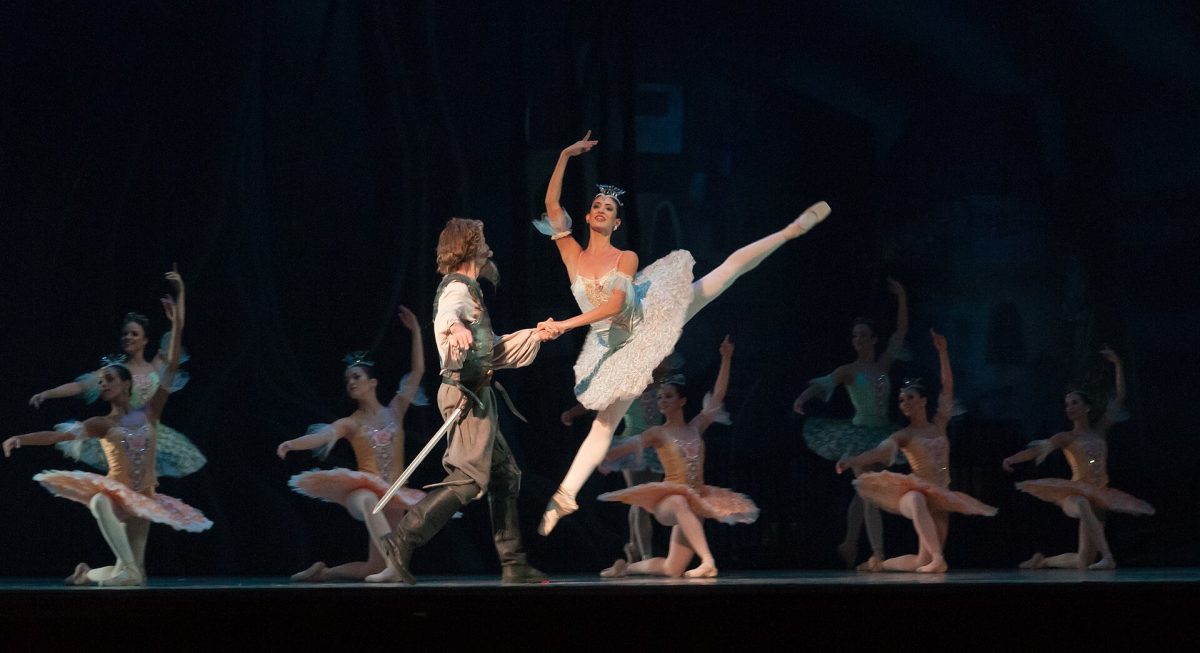
In a recent Variety and CNN townhall with actors Timothée Chalamet and Matthew McConaughey, Chalamet called ballet and opera “dying art forms.” He continued, stating that he did not want to work in industries where people are asked to “keep this thing alive even though no one cares anymore.” These remarks quickly sparked controversy among the fine arts community, in many corners of social media and even from his peers in celebrity spaces. While Chalamet has been met with harsh criticism, some have come out in support of his perspective, believing that ballet and opera are, in fact, dying art forms. The debate raises the question: Are ballet and opera actually dying?
Surveys such as the Survey of Public Participation in the Arts showed that in 2008, only 8% of U.S. adults had seen a ballet within the past year. Alongside ballet was opera, with only 2% of adults responding that they had seen an opera performance within the past two years. In a modern world of short-form content, social media, and movies always at your fingertips, classical arts have struggled to keep up.
This, accompanied by the fact that performing arts are not exactly cheap in modern times, has likely helped lead to a decline in modern ballet and opera ticket sales. The two art forms simply cannot outcompete cheaper alternatives in modern times. At the time of writing this, Austin’s renowned Zach Theater is selling tickets to Dear Evan Hansen starting at $28 for a partial view of the performance, with tickets that have a full view costing $45-$111 each. If someone were to plan to see this or similar performances with their family, they would most likely be expected to spend $100 or more that night alone.
The idea that performance arts are dying is not exactly an uncommon one. In fact, it is one commonly said by professors or scholars. Theater itself is commonly referred to as a dying art form by those who care about it the most. This does not mean, however, that performance arts are uncared for. In fact, they are still seen as some of the most beloved. I myself recently had the opportunity to see Ballet Austin’s MARIE ANTOINETTE: Vampire Queen of Versailles. The work was beautifully done, with a nearly full house of audience members excited to see the ballet.
Fans of live performance can still be found selling out venues, as seen by many opera and ballet companies that responded to Chalamet’s claims with videos of full houses for their own performances. While performance arts may not have the largest fan bases, they certainly have some of the most dedicated. Ballet dancers spend countless hours training under rigorous conditions, often damaging their own bodies, all in pursuit of bettering their art. Opera singers treat their voices with the same care as an instrument, also putting countless hours into their own training and performances.
While Chalamet’s claim that ballet and opera are dying may have some merit, the claim that no one cares about these art forms anymore certainly does not. Anyone who has met a live performance superfan will know how much these things are cared for. Chalamet’s comments, instead of showing respect or care for the countless hours put in by his fellow performers toward their craft, show a blatant disregard for their hard work. This fact is quite ironic when paired with the idea that movies could also be described as a dying art form for many of the same reasons as ballet and opera.
Many people describe modern movie theater prices as too expensive and would rather wait for a movie to come out digitally instead of seeing it in theaters. Especially since COVID-19, movie theaters have struggled to fill their seats consistently and, in response, have increased the cost of seeing a film even more. The world has become incredibly expensive, and when someone can rent a movie for a fraction of the price it would cost to see it in person, the answer for many becomes obvious.
While ballet and opera may not have the most significant hold on the entertainment industry, saying that they are being forcibly kept alive is far too simplistic a view. Ballet and opera have plenty of fans committed to supporting their local performances and incorporating the art forms into their lives. These forms of performance, while not the most popular, have been around for hundreds of years and certainly will be around for hundreds more.





All comments must have a verified email in order to be approved. Please check your inbox after commenting.