
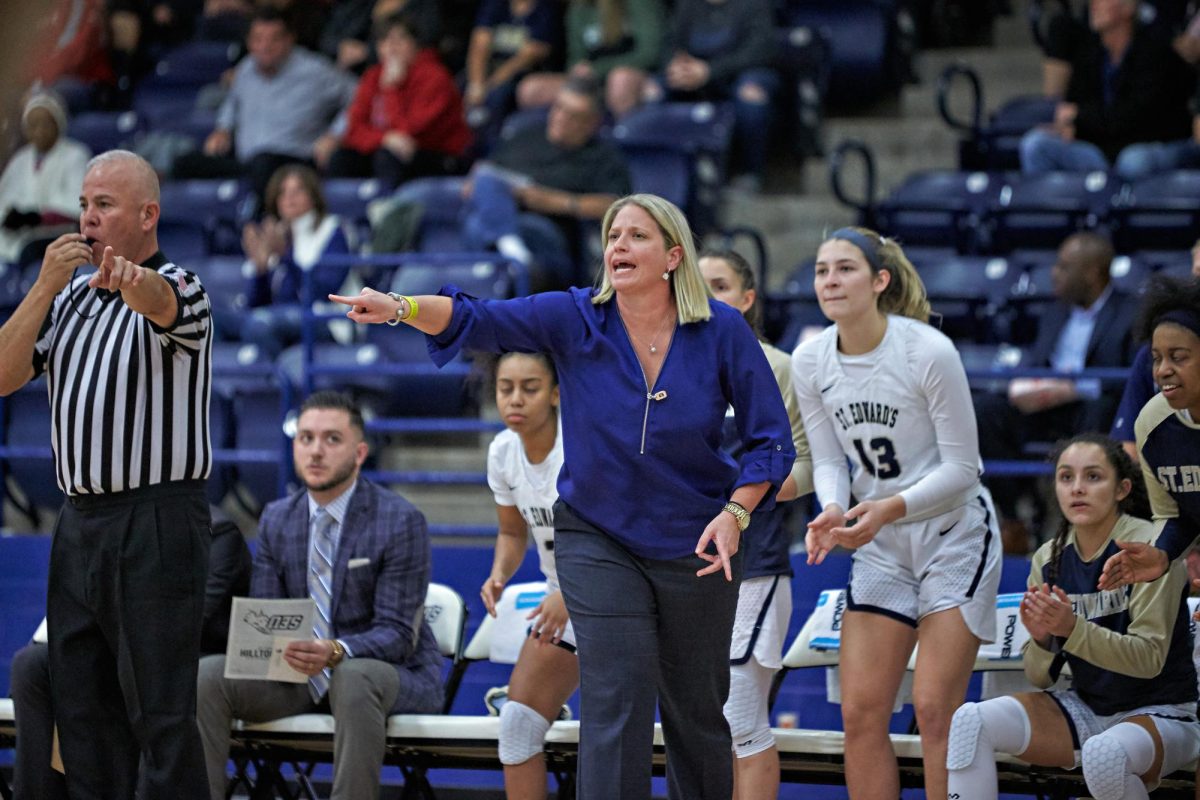
For one college basketball program, tradition is more than routine — it’s a foundation built on shared values, resilience and a sense of family that proved essential during the uncertainty of the COVID-19 pandemic.
The team’s culture, as defined by head coach J.J. Riehl, begins with a simple idea: shared values guide everything. Every player, coach and staff member contributes to that culture through their actions, words and mindset. At the center of those values are “toughness” and “togetherness,” principles the program actively defines and reinforces daily.
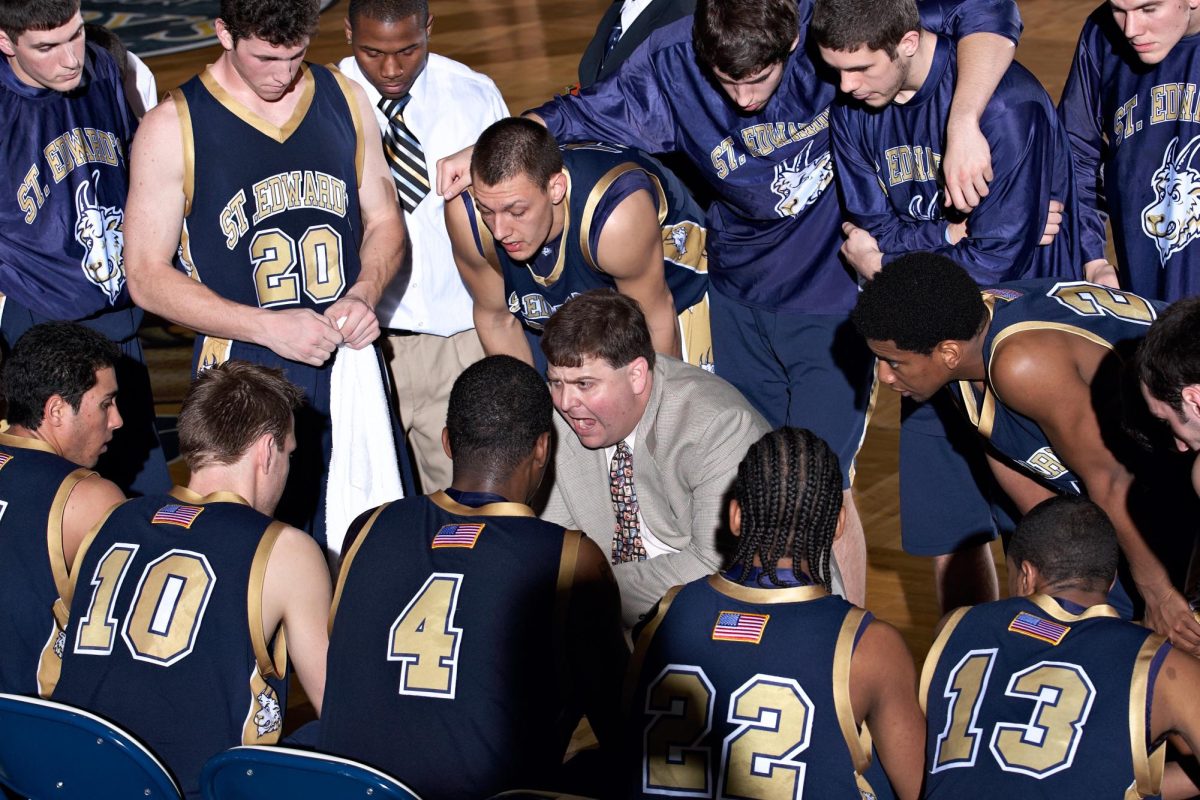
Those values come to life through longstanding traditions. The most enduring is a phrase repeated at the end of every huddle: “One team, one family, one love.” The saying has become synonymous with the program, connecting all its players and extending beyond the court. Whether it was a letter, email or a text message, the phrase became a natural signoff for Riehl — even when she wasn’t aware of it.
Other traditions have developed over time. After wins, players and coaches participate in celebratory locker room skits or raps, a ritual that dates back nearly a decade. More recently, the team introduced a weekly award system tied to performance and leadership, inspired by a French folklore creature named Dahu and designed to encourage players to strive for excellence.

While these traditions are typically constants, the COVID-19 pandemic challenged the program’s sense of togetherness in unprecedented ways. During the height of restrictions, players could not practice as a full team, often limited to small groups. But despite barriers, the team found ways to maintain connection.
According to Riehl, players themselves took initiative, seeking each other out in a time marked by isolation. With campus largely empty and social interaction limited, teammates leaned on one another more than ever.
“It was a sign of absolute resilience,” Riehl said. “They were responsible for their togetherness outside of here because we were so restrictive in what we could do. They did a great job of making sure that they stayed together, and they took that initiative. There were so many things we were worried about, and togetherness and them being normal kids was definitely at the top of the list.”
Concerns during that time extended beyond basketball. Mental health, loneliness and maintaining a sense of normalcy became top priorities.
Looking back, the experience has had a lasting impact. The program has become more intentional about defining what togetherness truly means and how it should look in practice. That period of disruption ultimately strengthened the team’s identity. What emerged is a program more aware, more connected and more deliberate in preserving the traditions that continue to define it.
“It’s respecting the contributions of the people that came before you,” Riehl said. “We wouldn’t be where we are today if it wasn’t for us getting through those years and the resilience of those kids.”
Even as the program has moved further away from the height of the pandemic, those lessons continue to shape its day-to-day approach. Riehl and her staff have placed a greater emphasis on being intentional — not just in how they coach, but in how they communicate, build relationships and define expectations for their players. What “togetherness” looks like is no longer assumed; it is discussed, modeled and revisited regularly.
That intentionality has also influenced how new traditions are introduced. Rather than simply adding rituals, the program evaluates whether each one aligns with its core values of toughness and unity. The Dahu awards, for example, are not just about performance, but about recognizing effort, leadership and consistency — qualities that reflect the culture the team is trying to sustain.
For players who experienced the COVID-19 years, those traditions carry even deeper meaning. Moments that may have once felt routine — a full team practice, a postgame celebration, even a simple huddle — are now viewed through a different lens. They represent opportunities that were once uncertain or unavailable.
In that way, tradition has evolved from something inherited to something actively protected. It serves not only as a connection to the past, but as a responsibility for the present — a way for each team to carry forward what was built before them while continuing to grow.


All comments must have a verified email in order to be approved. Please check your inbox after commenting.