
For St. Edward’s men’s soccer, tradition isn’t defined by a single ritual or routine. Instead, it lives in something less tangible: A shared sense of pride, connection and responsibility that was tested, and ultimately strengthened, during the COVID-19 pandemic.
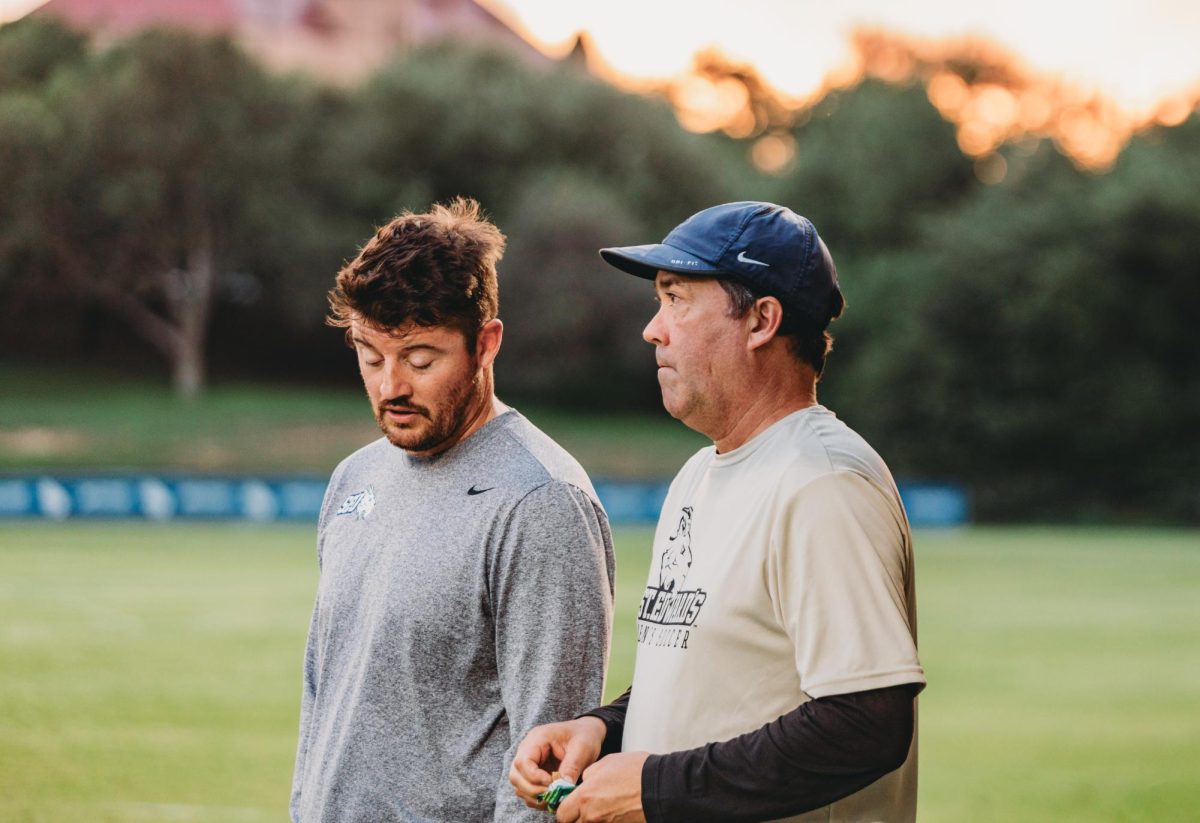
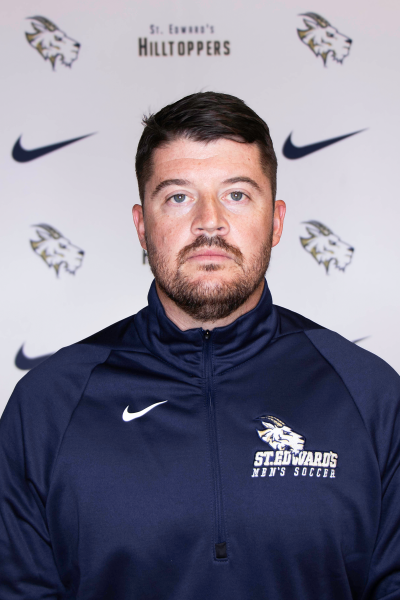
At the center of the program’s culture is a commitment to trust, integrity and hard work. Coaches Brian Young and Corey Miller describe their team as one built on authentic relationships, where players are expected to be honest, accountable and fully invested in one another.

That foundation has remained consistent for years, shaped in part by recruiting players who not only bring talent to the field, but also embody the values of the program. Even as rosters change, the expectation stays the same: represent the culture and contribute to something larger than individual success.
Traditions help reinforce that identity. One longstanding pillar is community service, something the program has prioritized since the early 2000s. In recent years, that commitment has evolved into a new preseason tradition, where players and coaches volunteer around campus together before the start of competition.
The event serves multiple purposes — introducing new players to the team, connecting athletes with the broader athletic department and reinforcing a message that extends beyond soccer.
“It’s a really neat team event, and I think after we get done with it, it’s really meaningful for the whole team, and it teaches that there’s a lot of other things out there that are bigger than soccer,” Young said.
Another defining element of the program is what Young calls the “golden blueprint,” a flexible framework that outlines team goals, culture and expectations. Unlike rigid rules, the blueprint evolves each year, shaped by both coaches and players. It allows athletes to have a voice in defining the environment they want, while still holding them accountable to team standards outlined in the program’s handbook.
That balance between structure and player ownership became especially important during the pandemic, when the program faced an even greater challenge: It was temporarily cut.
During that time, maintaining tradition looked very different. With no active team, coaches and players turned to virtual spaces — including Zoom calls and a dedicated alumni network — to keep the program’s identity alive. Conversations with former players became a lifeline, offering both support and a reminder of what the program represented.
For months, coaches stayed connected to alumni through long conversations, reinforcing relationships that had previously taken a backseat.
“I think we valued the alumni a lot more because they were super supportive,” Young said. “Because of that, we’ve been trying to really promote our alumni game and alumni events and just reconnecting with the alumni, but also for our players to be able to talk to them about the industry they’re in, the alumni, to maybe network for job opportunities.”
When the program was reinstated in 2023, that support became a driving force in its rebuild. Former players returned for alumni games, reconnected with the team and helped reestablish a sense of continuity between past and present.
Leadership from within the team also proved critical. Players with prior ties to the program helped set the standard for a roster that included many newcomers. They reinforced expectations — from daily habits to on-field performance — and modeled what it meant to represent St. Edward’s soccer.
The result was a gradual but steady rebuilding process. Each season since the program’s return has shown progress, both in performance and in reestablishing the culture that defines it.
Looking back, coaches say the challenges of the COVID era ultimately deepened their appreciation for the program and its traditions. What was once routine is now something to be protected.
Today, tradition is less about a single act and more about a collective mindset — one where each group of players is expected to leave the program better than they found it. It is reflected in the relationships that extend beyond graduation, the alumni who remain connected and the pride associated with wearing the St. Edward’s jersey.
“Tradition for us is the family that it creates,” Miller said. “Going back to alumni or anybody that has touched our program in a positive way always has the ability to come back and have a conversation with us. I think for me, the tradition is each class that graduates leaves it a little bit better than the previous class.”
In a program shaped by disruption, that enduring sense of purpose has become its strongest tradition of all.

All comments must have a verified email in order to be approved. Please check your inbox after commenting.