
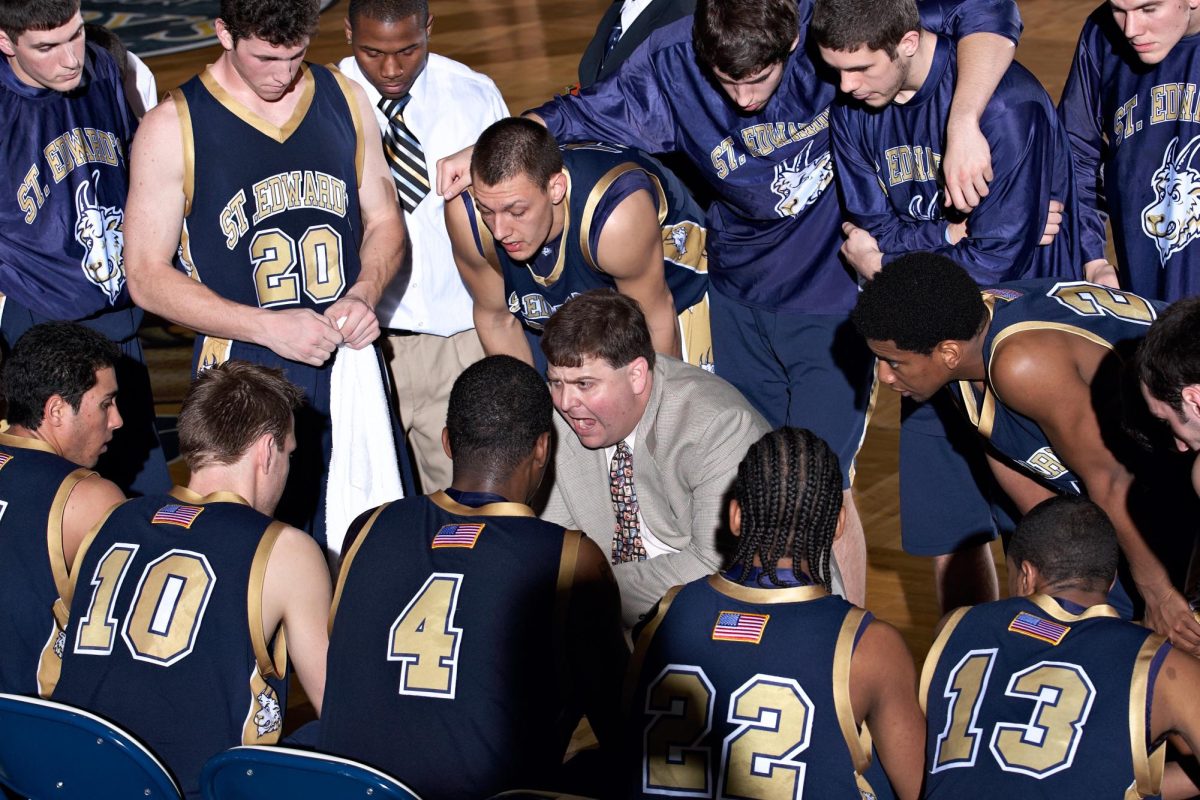
For the St. Edward’s men’s basketball program, tradition is not rooted in chants or rituals alone — it is built on something less visible, but more enduring: honesty.
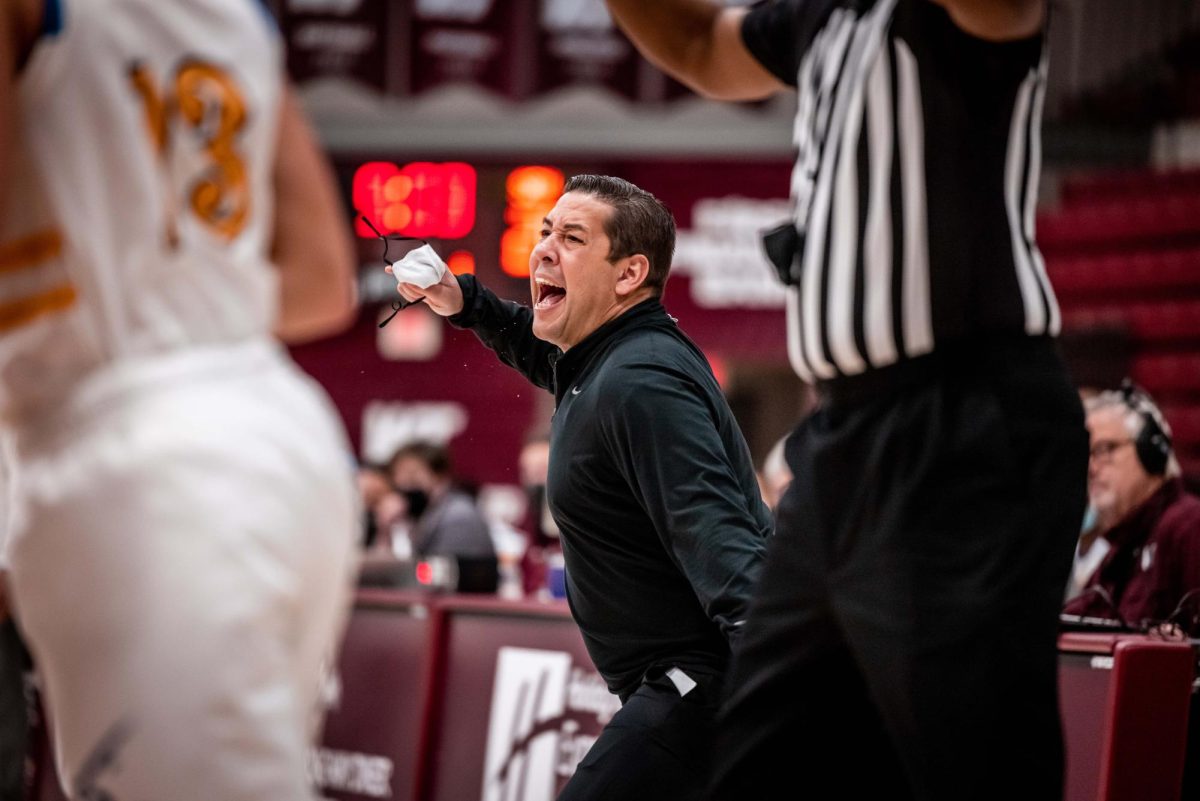
The team’s culture, according to head coach Andre Cook, begins with authenticity. Rather than relying on surface-level team-building exercises, the program emphasizes real relationships grounded in truth, trust and accountability. That foundation, he says, becomes essential when the season inevitably brings challenges.
“You need something real to fall back on,” Cook explained. “When things get hard, if it’s not authentic, it won’t hold.”
While it took time early in his tenure to establish what worked, Cook points to the last 13 years as a period where the team has fully embraced a culture centered on honesty and connection — values he traces back to his own playing days and the lasting relationships he still maintains with former coaches.
Traditions within the program reflect that same emphasis on connection. One of the most meaningful is “Bio Night,” an annual event where players introduce a teammate to the group, sharing personal stories that often lead to emotional and revealing conversations. The exercise, sometimes paired with personality assessments like the Enneagram and Myers–Briggs Type Indicator, serves as a starting point each season — helping both players and coaches understand one another beyond basketball.
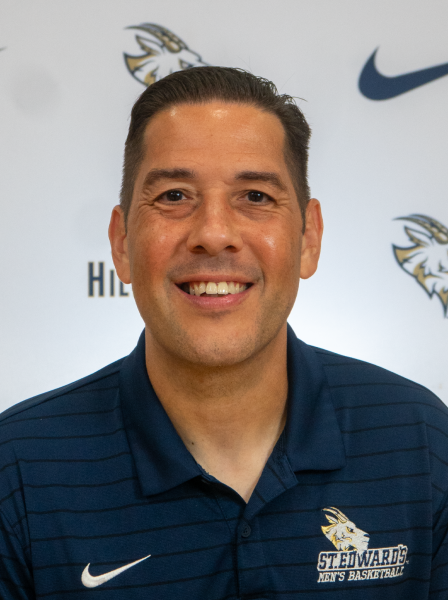
“It can be long, it can be emotional, it can be funny — but it helps guys really get to know each other,” Cook said. When asked his reasoning for the Enneagram, he explains “I always thought that everyone should act like me, and then I realized like people have so many other different personalities, and I think that’s helped me as a coach as well.”
Those traditions, however, were put to the test during the COVID-19 pandemic.
In March 2020, the team was on the verge of postseason play, traveling to a regional tournament with one of the best records in program history. Then, abruptly, everything stopped. While on the road, players and coaches learned the tournament had been canceled. They turned around and returned home, uncertain of what would come next.
What followed was a period of isolation and instability. For months, players could not return to campus. Recruiting shifted online, often without in-person meetings. Practices, when they resumed, were heavily restricted — at times limiting players to individual workouts, wearing masks and using separate basketballs. Games were played without fans, stripping away another layer of the sport’s identity.
“It was nightmarish, and we didn’t have fans for a year and a half,” Cook said. “I remember playing during that time was awful.”
The disruption extended beyond the court. Staff changes, roster turnover and later external challenges like winter storms compounded the difficulty. A program that had built significant momentum — including back-to-back top-10 national rankings — suddenly found itself rebuilding with a drastically reduced roster.
Amid that uncertainty, team leaders played a critical role in preserving the program’s identity. Upperclassmen stepped forward to maintain a sense of brotherhood, encouraging teammates to stay committed despite recurring setbacks to the program. In one key moment during the winter storms in 2021, Cook met with seniors Ryan Garza and Logan Cook to ask a simple question: should they continue the season?
The answer was yes.
That decision sparked a turnaround. Despite the obstacles, the team regrouped and ultimately returned to the conference championship game — a result Cook credits to the resilience and leadership of his players.
The pandemic also reshaped certain aspects of the program. Virtual communication became more common, and there was a heightened focus on mental health as players navigated isolation and uncertainty. While not all changes became permanent, they reinforced the importance of checking in and supporting players beyond basketball.
Looking back, Cook sees the experience as both challenging and defining. More importantly, the program’s core identity remains intact.
“We’ve maintained who we are,” Cook said.
In a time when traditions were disrupted and routines disappeared, it was the team’s commitment to honesty and authentic connection that endured — proving that sometimes, the strongest traditions are the ones you can’t see.

All comments must have a verified email in order to be approved. Please check your inbox after commenting.