While I was looking at an article about the newly signed artificial intelligence (AI) “actress”, I was asked a question by my laptop: Are you a robot? After multiple unsuccessful attempts of trying to figure out if the little sliver of bicycle tire in a square by itself counted towards the test, I began to think to myself “A robot would probably be better at this than me.” AI has been around for a while now, but it’s become undeniably more prevalent in our society in recent years; it’s even driving Jaguars down South Congress right now. But the rise in AI when it comes to the arts has become increasingly concerning for people trying to make a living in creative fields, and I think this paranoia is not far-fetched.
When you think of a Hollywood star, you probably picture someone who’s spent years honing their craft, overcoming rejection and navigating the grueling demands of fame. You might imagine a real, live person with a personality, quirks and flaws. Now, imagine if that star wasn’t human at all. Instead, “it” (she?) was a creation, an AI “actress” named Tilly Norwood.
This digital actress, brought to life by the AI talent studio Xicoia, has caused a major stir in Hollywood. The aim? To make her the next Scarlett Johansson. But this ambitious plan has been met with severe backlash from the industry. For many, Tilly is not just a curiosity, she’s a symbol of something more troubling: the potential for AI to replace human talent in ways that undermine creativity, jobs and even the essence of what it means to be a performer.
This development is very concerning to anyone in the arts industry or anyone who wants to be a performer in the future. AI companies have been rapidly developing new technologies that aim to change the arts completely and make human creativity less of a factor. This includes things like visual art, painting, photography, film, writing, journalism, acting, singing and more. It feels inevitable that AI will become the new norm in the filmmaking process, which makes me uneasy. I don’t even know for sure if you can consider AI generated things art at all. AI takes an average of things that already exist to come up with its output. This has caused massive debates about the validity of AI generated creativity. Let’s take a look at this argument using the topic of writing as an example, as it’s probable that studios are going to start using AI to help write scripts, if they aren’t already.
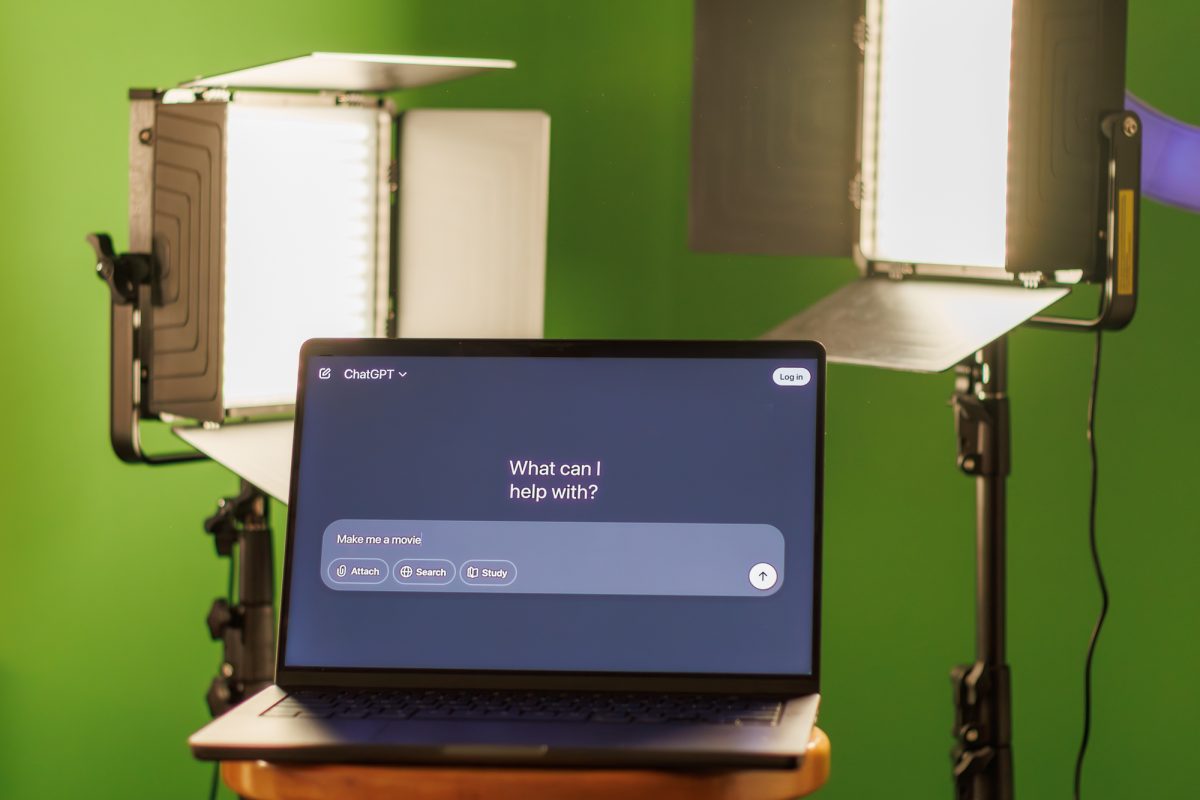
At its core, writing is the process of putting thoughts, feelings and facts into words that other people can read and understand. Large language models like ChatGPT and other AI systems work by identifying patterns in enormous amounts of human-written text to produce output that is both logical and pertinent to the context. In this sense, AI may generate texts that perform many of the communicative tasks that writing has historically been associated with by imitating the structures, styles, and semantics of human language. An AI can, for instance, write a business email, condense a news item, or etc. These outputs are readable, well-structured and meaningful, meeting many of the functional requirements of writing. Thus, AI-generated content is considered writing from a strictly linguistic and communicative perspective.
However, the question of authorship introduces significant complexity into this discussion. Traditional conceptions of writing are intimately tied to the writer’s identity, emotions and creativity. A novel or poem is not merely judged by the coherence of its language but by the originality and emotional resonance it conveys, qualities typically rooted in the human experience. Critics argue that because AI lacks consciousness, emotional depth and lived experience, it cannot produce “true” writing in the artistic or literary sense. From this perspective, writing is more than language, it is a reflection of the human soul, and AI, lacking such depth, can only ever approximate the surface features of real writing.
There were also reports recently of an AI R&B singer that got signed to a contract as well, causing massive uproar and negative responses from artists like SZA and Kehlani. This, as well as acting, is a field I just can’t picture an AI competing with human work. Music has been something that has brought people together for millenia, it is so deeply human that I can’t imagine artificial intelligence being able to tap into the nuances needed to make a good song. The same goes for acting. Acting is about subtleties in facial expressions, vocal delivery and reactions. AI still hasn’t shown the ability to even get close to matching an exact human behavior, I think it will struggle to come up with a performance that can be both convincing and entertaining enough for audiences to silence their skepticism.
AI can indeed be considered a form of art in several meaningful ways when it comes to acting as it fulfills many of the communicative functions of performance, operates under human direction and increasingly plays a role in collaborative creative productions. But it disrupts traditional notions of performance and artistic presence, it also encourages a more lazy approach to filmmaking as a craft. This will devalue human performance and lead to the loss of far too many jobs in the field. As we continue to explore these developments, it’s clear that the very definition of acting is undergoing transformation and it’s definitely worth keeping an eye on.


All comments must have a verified email in order to be approved. Please check your inbox after commenting.