
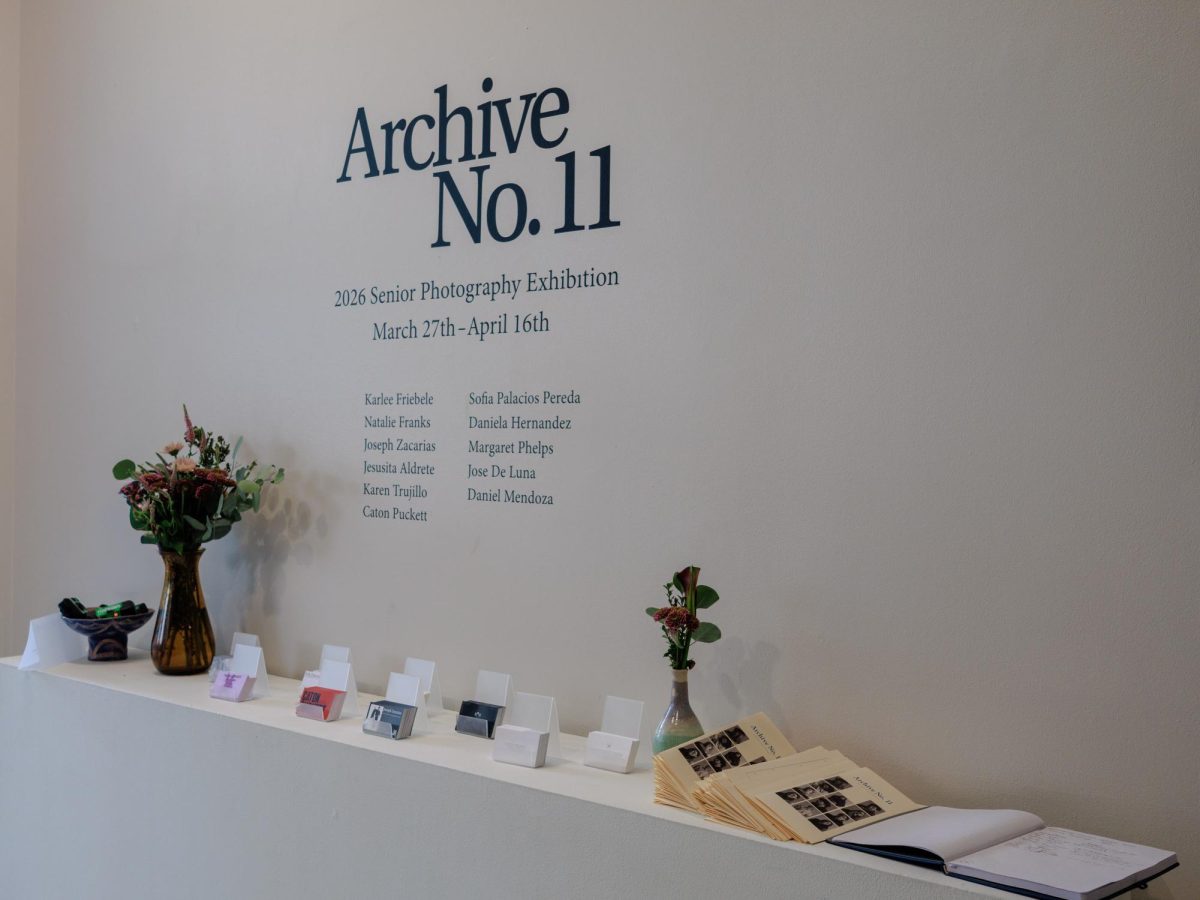
Archive No. 11 was hosted the evening of March 27 as a celebration and display of the work of 11 graduating photography students. It displayed an archive of the students’ senior thesis, a year-long project that gave them time to dive deep into their artistic and expressive capabilities. The work serves as a culmination of the artist’s growth in technicality and artistic vision and has given the students an opportunity to present their work to the public. The showcase has a diverse panel of artistic and emotional style, all centered around the human experience. This exhibit remained on display in the Fine Arts Center until April 10.

Jose De Luna’s “Raíces y Orgullo,” meaning “Roots and Pride” in English, explores themes of race and sexuality through photography. De Luna used luster paper and inkjet, a traditional photography style, to convey a deep sense of authenticity and intimacy. The project’s central theme is the humanization of Latino, Latina and Latine people and the feeling of belonging in the LGBTQ+ community. De Luna took photos of people within the queer Latine community, all his close friends, to showcase that you don’t have to fit into a box to be part of a community. De Luna was motivated by the common occurrence of people telling him and his close friends “you don’t look LGBT enough,” or “you don’t dress LGBT,” which tends to make them feel like they have to stick within a set of rules to maintain their identity. De Luna wants to highlight that “it’s okay to be you. You don’t have to look a certain way. You don’t have to act a certain way. You can still be an athlete. You can still be an actor. Your identity doesn’t define you, but you define your identity.” This project is close to De Luna, as he has seen the misidentification of many close friends, several of whom are showcased in the photographs. He has put himself and his close friends in a vulnerable position to present important themes of identity, expression and community.

“Patchwork” by Natalie Franks is a collection of cyanotype prints — one large quilt and four smaller quilts. They are a representation of her childhood memories, focused on “the fleeting nature of memories and trying to hold onto them and remember them.” She enjoyed experimenting with new techniques, such as learning to sew for the quilts and printing on fabric instead of traditional cyanotype paper. Her quilts serve as a recollection of her childhood memories and how her “attempt to bring them forward … is blurry, disjointed and fragmented, which is a true mirror of the unreliable nature of human memory.” Franks used both pictures from her past and pictures taken in the present to blend her early life with who she has become today. It is a reminder to live in the present and try to appreciate the memories you are making everyday.
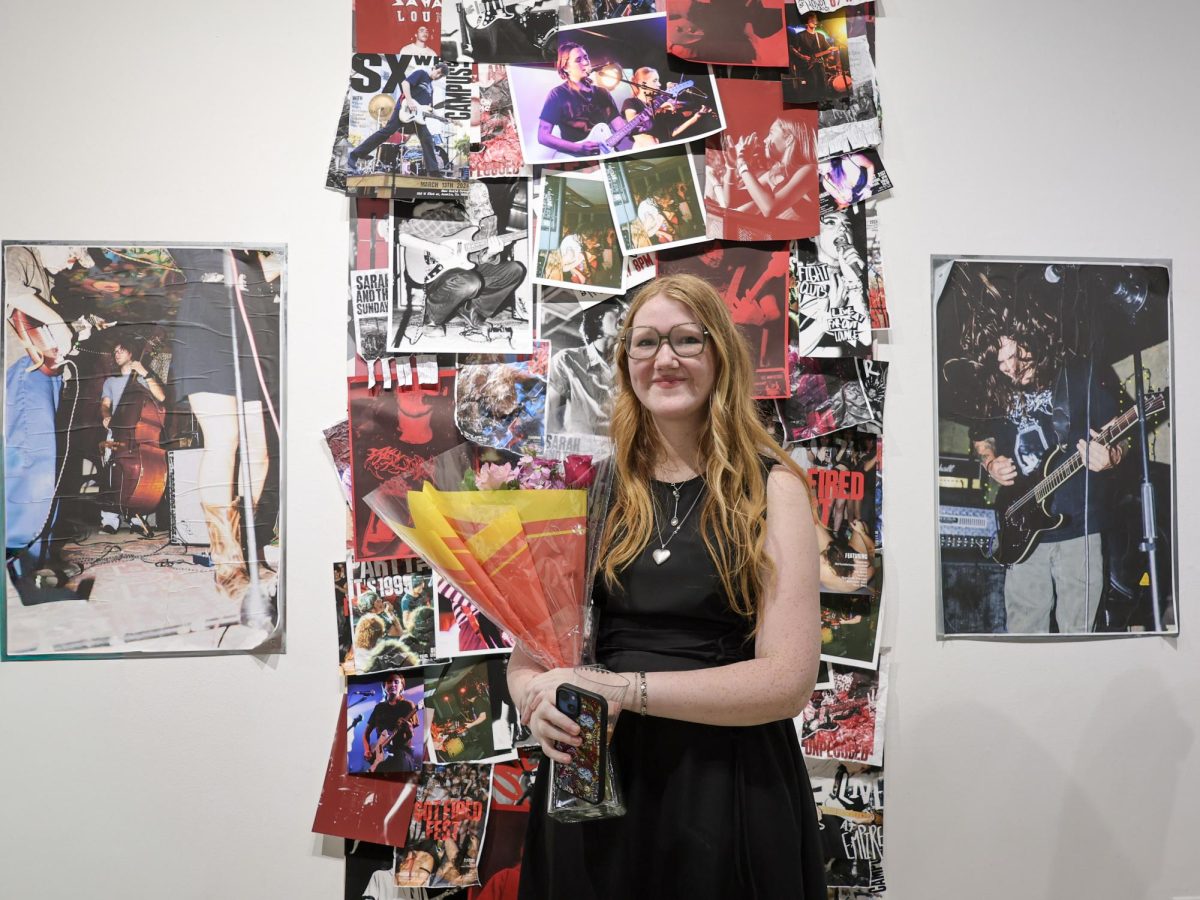
Caton Puckett’s collage and journal entitled “Live and Unplugged” details the live music scene in Austin. It is appreciative of how temporary the shows are. Puckett has a background of photographing and documenting concerts, which helped her realize that “performances are loud, energetic and communal, but the moments disappear quickly as bands change and venues come and go.” Her work includes colorful posters and disposable materials from the local music scene, adding an authentic and engaging take, as well as her own concert photography. From Caton’s colorful and dynamic collage of the equally spirited local music scene, she wants people to take away that “nothing is permanent. Everything comes and ends, things change, so just take in the moment.”
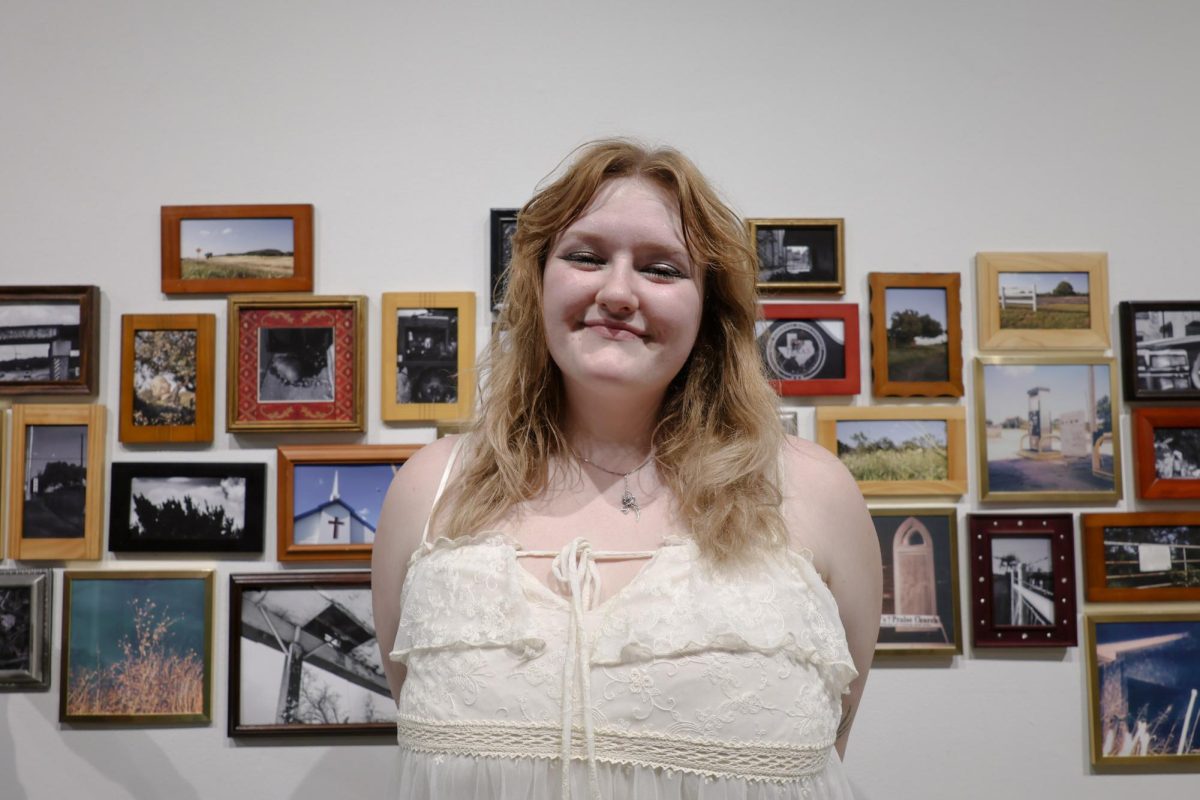
Margaret Phelps created “Southern Hostility,” the first installment of a larger project, a photo collage to depict a road trip across Texas that captures the essence of the state through her perspective in the present and from childhood memories. Her and her boyfriend traveled nearly 10,000 miles around the state, capturing photos that she visited in her childhood family road trips. She was inspired to create this photographic series as a way to process changes she saw in her hometown as she moved to college. The work represents Phelps’ struggle with “accepting change and overcoming perfectionism” through a “Southern Gothic vibe that captures this beautiful, but also heavy feeling of the past and carrying it with you; a bittersweet nostalgia.” Phelps utilized four different photo mediums to document her journey: film, Polaroid, color film and digital. To further foster a vintage, nostalgic look, she used thrifted frames to display her photos. Phelps’ work was Rosie Chilek’s, a student who came to support the art of her classmates, favorite piece of the night, as it was “very personal to the artist but also bare so (she) could put (her) own feelings into it. Relating to these images was easier than connecting with some of the other pieces because it’s so vague.”
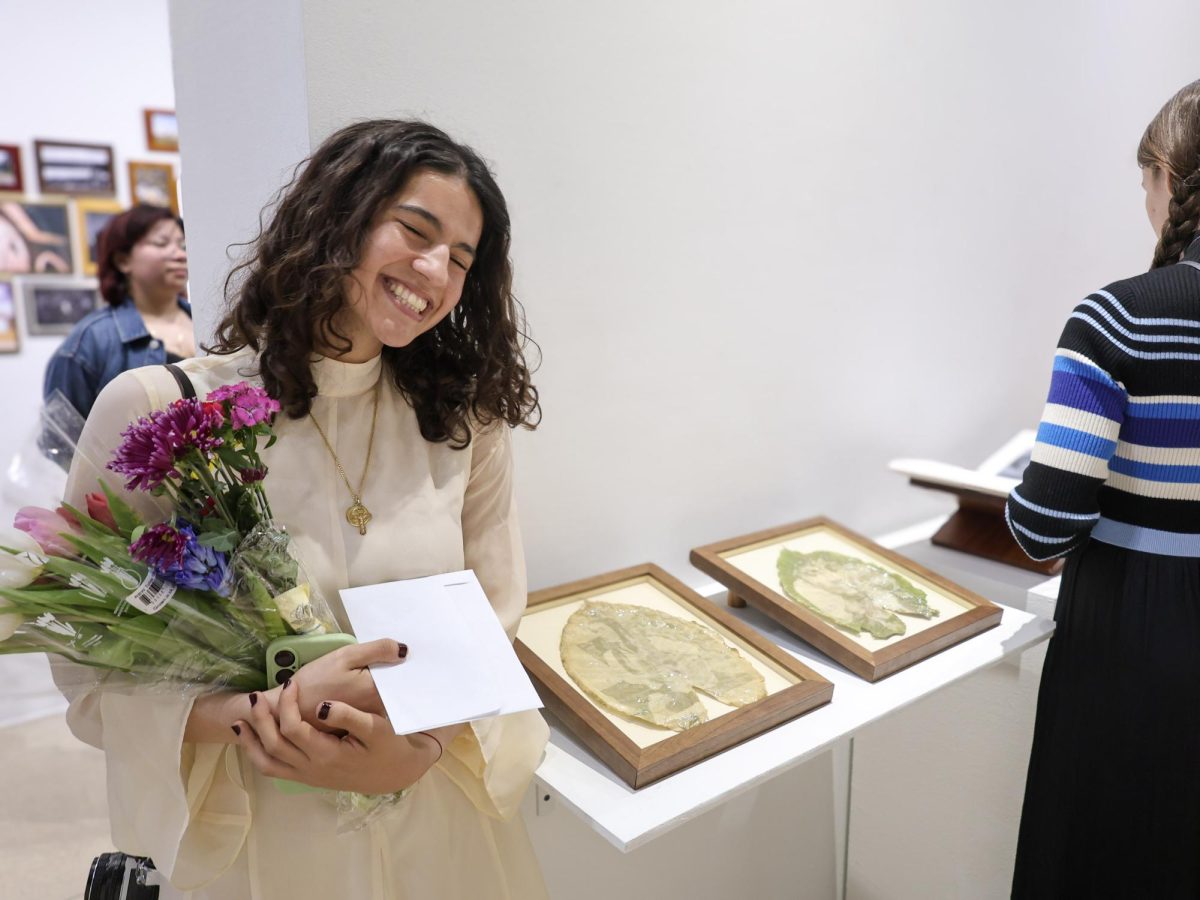
“Desarraigo” (meaning “uprooted” in English) by Sofia Palacios Pereda, an ongoing work, dives into Venezuelan displacement and the identity that comes with it. She used chlorophyll printing for this project — taking a photograph, turning it into a digital negative and then sun printing it onto the leaves. Since it is a natural process, the photos will eventually fade over time. “I used the medium to tell the story as well to show how identity changes,” Pereda said. “It’s moving and constantly going to change; maybe fade away.” She enjoyed seeing the final outcome and seeing people interact with her work. “A lot of terrible things are happening in Venezuela right now, and it’s kind of my way of preservation, a way for people to see this experience. We had to record this terrible moment for us,” she said. “I want people to sit with the faces in the photo and put yourself in someone else’s shoes.”
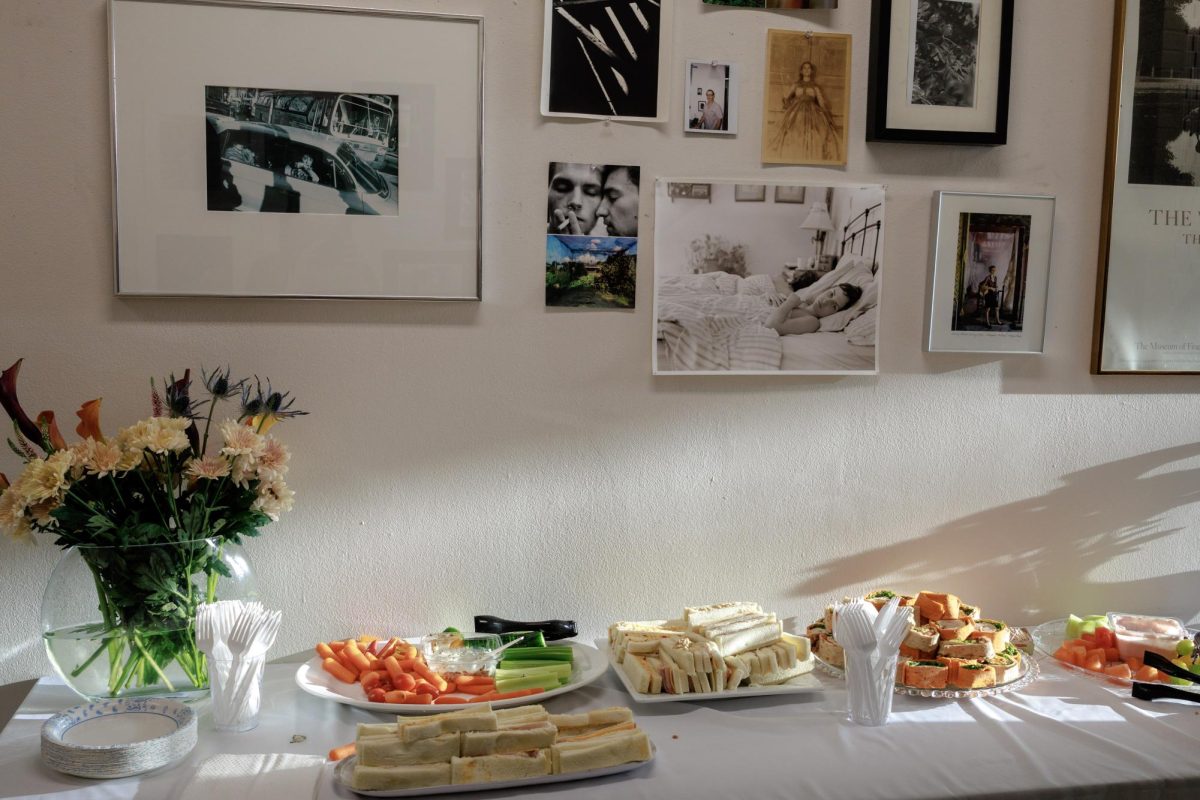
Refreshments, wine and food were provided at the showcase to foster a comfortable and welcoming atmosphere that encouraged conversation and a deeper engagement with the artwork. Guests mingled all evening, discussing the pieces, sharing interpretations and engaging in meaningful conversations with the artists. It was a very relaxed environment, making the art feel accessible and open to honest reactions.

The exhibit was packed with students, faculty and families of the artists. Attendees were engaged throughout the evening, connecting with the works and talking with the artists to understand the intended interpretation of the work. Renee Lai, visiting assistant professor of arts, directed the students in working on their senior thesis. She is “proud of how all the photo seniors worked together to get all the work hung.” Lai says that by showcasing their work, “the students are prepared professionally for what it’s like to decide how their work is displayed. There’s a lot of intentionality and decision-making behind the way each work is shown.” She says that it is also important for the students to see how people react to their ideas and for them to look at community reactions to see how it is interpreted.


All comments must have a verified email in order to be approved. Please check your inbox after commenting.